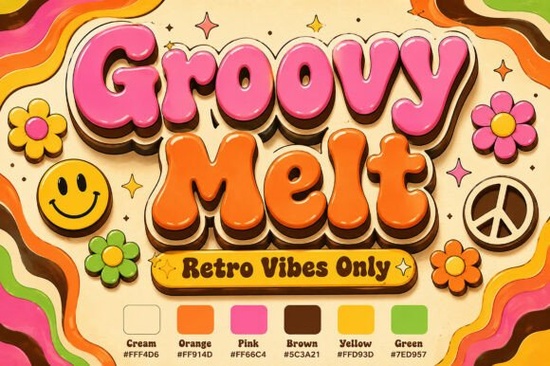
Getting that authentic 1970s vibe requires more than just picking a curvy typeface. You need letterforms that actually feel like they belong on a vintage concert poster or a retro surfboard. The Groovy Melt Font captures this exact aesthetic with its ultra-plump, volumetric script and melting baseline. Instead of looking like a modern digital imitation, it brings genuine mid-century nostalgia to your canvas with its bubblegum pink and retro orange palette, making it a highly practical choice for designers and print-on-demand sellers.
What gives this typeface its authentic vintage feel?
The secret to a convincing retro design lies in the small details. This specific typeface does not just rely on wavy letters; it builds actual depth. Each character is accented with liquid highlights and backed by deep, multi-layered chocolate brown drop shadows. This high-contrast color combination mimics the look of vintage screen printing and hand-painted signage.
The melting baseline is another crucial element. Rather than sitting perfectly straight, the bottom of the letters organically dissolves and drips. This gives the text a fluid, alive appearance that perfectly matches the psychedelic art movement. When you are designing for a brand that wants to project a sense of established design mastery and legendary retro-pop cool, these subtle imperfections make all the difference.
Which projects work best with a melting script style?
Because of its high volume and thick letterforms, this style is best used for short, impactful words. It is not meant for long paragraphs. Here are a few ways creative hobbyists and small businesses can apply it effectively:
- Custom sticker lines: The thick outlines and drop shadows make the letters easy to cut and highly visible on laptop lids or water bottles.
- Vintage festival posters: Use it for the main event title to immediately communicate a fun, relaxed, and nostalgic atmosphere.
- Funky apparel graphics: It works beautifully on the back of t-shirts or as a bold chest logo for streetwear and surf brands.
- Mid-century lifestyle branding: Perfect for coffee shops, record stores, or boutique hotels looking for a distinct visual identity.
If you are exploring other nostalgic options for your project, you might want to look at this curated selection of vintage typefaces to compare different eras. For a bolder, more geometric approach, checking out these thick and heavy lettering styles can give you a completely different retro flavor. Alternatively, if your brand leans more toward floral and feminine aesthetics, browsing through these botanical-inspired display options might be a better fit for your specific niche.
How do you pair a high-volume display typeface with body text?
When your main heading is this loud and expressive, your supporting text needs to be quiet and legible. The heavy drop shadows and bright colors of the main title will naturally draw the eye, so you want to avoid competing for attention.
When laying out editorial spreads or event flyers, you will want to pair your retro headings with clean editorial typography choices for the body text. A simple, unadorned sans-serif or a classic typewriter style works perfectly to balance the visual weight. If you need something with a slightly more handwritten, casual vibe for subheadings, take a look at these relaxed brush script alternatives to see if they match your overall layout.
What should you check before sending your retro design to print?
Working with highly detailed, multi-layered typography requires a bit of prep work, especially if you are printing on physical products. Follow this quick checklist to ensure your final product looks as good in person as it does on your screen.
- Convert to outlines: Always convert your text to vector shapes before sending it to a printer. This prevents any missing font errors and locks in the melting baseline details.
- Check the drop shadows: Ensure the chocolate brown shadows are dark enough to print clearly on your chosen material. If you are printing on a dark garment, you may need to add a subtle underbase or adjust the shadow color.
- Simplify for small sizes: If you are printing the design on a small item like a pen or a lapel pin, the liquid highlights might get lost. Consider using a simplified, single-color version of the text for very small applications.
- Test the contrast: Print a test page on your home printer to see how the bubblegum pink and retro orange interact. Screen colors are always brighter than ink, so this helps you manage expectations.
Taking these extra few minutes to prepare your files will save you from costly reprinting mistakes and ensure your vintage-inspired designs look sharp and professional every time.
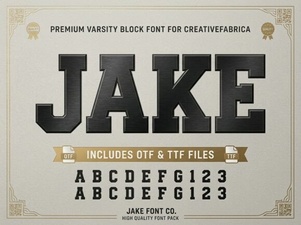 Unleash Creativity with the Jake Font Style
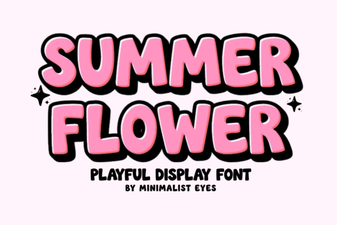 Designing with Summer Flower Fonts: Styles & Projects
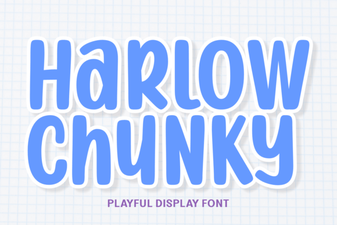 Harlow Chunky Font: Bold Typography Projects
 Building a Stacked Brick Font
 Hello Angela Font: Elegant & Creative Lettering
 Motcha Font: a Creative Typography Guide