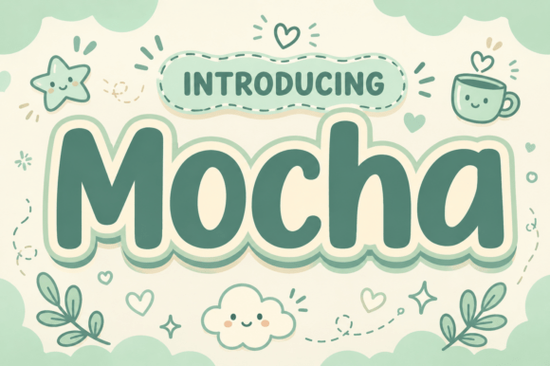
When you need a typeface that feels like a warm hug from a neighborhood café, the Motcha Font is a highly practical choice. This display typeface features ultra-bold, pillowy letterforms with soft, rounded contours. It is specifically built for designers, print-on-demand sellers, and small business owners who want to add a cozy, approachable vibe to their visual projects without sacrificing readability. The clean geometry balances the heavy presence of the letters, making it incredibly easy to read even at smaller sizes.
What makes this typeface stand out for coffee shop branding?
Coffee shops and cozy lifestyle brands rely heavily on visual warmth to attract customers. The thick, cloud-like sticker outlines and earthy cream and sage-green color palette built into this font give it a unique, welcoming personality. Instead of looking like a standard corporate typeface, it feels handcrafted and inviting, which helps local businesses build trust and community.
If you are working on a menu board or a stamped loyalty card, the heavy presence of the letters ensures they are easy to read from a distance. The soft edges also prevent the ink from bleeding too harshly on textured paper. For those putting together a broader editorial layout or a brand guidelines document, you might want to pair it with cleaner serif options found in our collection of editorial and magazine typefaces to balance the visual weight and keep the body text highly legible.
How can crafters and POD sellers use this font effectively?
Print-on-demand sellers and crafters need typography that translates well to physical products like ceramic mugs, canvas tote bags, and vinyl sticker sheets. Because the letterforms have clean geometry and rounded edges, they cut cleanly on vinyl plotters and print beautifully on fabric. The bold strokes prevent thin lines from peeling off or fading after washing.
This style is also an excellent fit for kids' products. When designing for younger audiences, you want letters that look friendly, safe, and soft. You can easily mix this aesthetic with other fun and playful options for kids' projects to create a cohesive, cheerful product line that appeals to parents.
For greeting cards, party invitations, or nursery wall art, the gentle charm of the font keeps the mood light and celebratory. If you need a slightly more personal, handwritten feel for the secondary text or signatures, consider looking at script and signature styles to complement the bold, structured headers.
Which design projects work best with rounded display typefaces?
Rounded, ultra-bold fonts are incredibly versatile for both digital and physical media. They work exceptionally well for several projects:
- Social media headers: The thick strokes grab attention quickly on small mobile screens and stand out against busy background photos.
- Product packaging: The soft edges make lifestyle, beauty, and food products look more approachable and organic.
- Children’s book titles: The pillowy shapes feel engaging and non-intimidating for young readers learning to recognize letters.
When building a brand identity, experiment with different moods depending on the campaign. If a specific project requires a more retro, nostalgic, or psychedelic vibe, you could swap this out for melted and retro-inspired lettering. On the other hand, if you are designing for a summer campaign, a beachside café, or a surf shop, bright and breezy coastal typefaces might suit the seasonal theme much better.
How should you prepare your files for printing?
Before sending designs to the printer or uploading them to your store, prepare your typography correctly. Display fonts with thick strokes and tight kerning can sometimes cause issues if not outlined properly. Always convert your text to curves or outlines in your vector software to ensure the printer sees the exact shapes you designed, regardless of the fonts they have installed on their machines.
Quick checklist for your next design project
Before exporting final files, run through this practical list:
- Convert to outlines: Always change your text to vector shapes before sending files to a commercial printer.
- Check the contrast: Ensure the earthy cream and sage-green colors stand out clearly against your chosen background.
- Test the scale: Print a physical proof at actual size to verify the thick strokes do not fill in the negative space.
- Pair thoughtfully: Use a simple, clean sans-serif for your body copy to let the bold display header do the heavy lifting.
Take a moment to review your current project files and apply these formatting steps to guarantee a smooth, professional result.
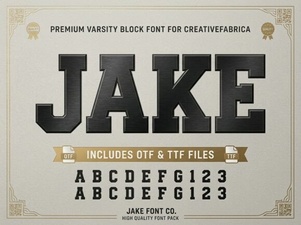 Unleash Creativity with the Jake Font Style
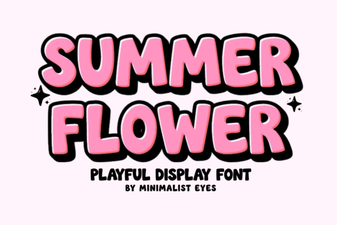 Designing with Summer Flower Fonts: Styles & Projects
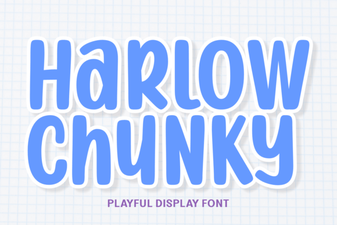 Harlow Chunky Font: Bold Typography Projects
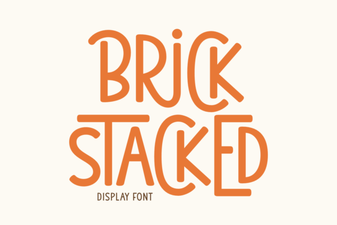 Building a Stacked Brick Font
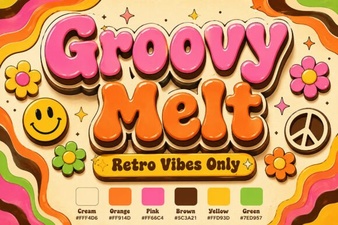 Groovy Melt Font: for Creative & Playful Designs
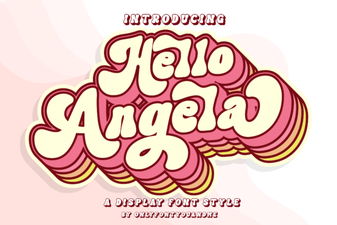 Hello Angela Font: Elegant & Creative Lettering